She Stories
Droupadi Murmu: From a Remote Village to the President of India — A Story of Courage and Perseverance
By Ananya Varma
Some journeys are remarkable because of where they begin. The story of Droupadi Murmu, the 15th President of India, is one such journey.
Born in a remote village in Odisha, Murmu grew up in circumstances where even pursuing higher education was a significant challenge. Through education, public service and perseverance, she went on to become the first woman from her village to receive a college education, later serving as a teacher, legislator and Governor before becoming the President of India in 2022.
Her life story is not simply about reaching a prestigious position. It is about the importance of education, resilience and continuing to move forward despite difficult circumstances.
A childhood far from the corridors of power
Droupadi Murmu was born on June 20, 1958, in Uparbeda village in Mayurbhanj district of Odisha, into a Santhal tribal family.
Her early years were spent in a rural environment where opportunities for higher education were limited.
She began her schooling at the local primary school. Determined to continue her education, she later moved to Bhubaneswar for higher studies.
According to the official President of India profile, Murmu became the first girl in her village to pass the matriculation examination and later became the first woman from her village to receive college education.
Education became the foundation of her journey
Murmu completed her Bachelor of Arts degree in Political Science and Economics from Ramadevi Women's College, Bhubaneswar, in 1979.
Education would remain an important theme throughout her life.
Before entering politics, she worked as a Junior Assistant in the Irrigation and Power Department of the Government of Odisha from 1979 to 1983.
Years later, she returned to education as an honorary teacher at the Sri Aurobindo Integral Education & Research Centre in Rairangpur between 1994 and 1997.
Her own experience would eventually shape her belief that education can transform lives, particularly for women and girls from communities with fewer opportunities.
From teacher to public servant
Murmu entered public life at the grassroots level.
In 1997, she was elected as a councillor of the Rairangpur Notified Area Council in Odisha and later became its vice-chairperson.
She subsequently entered the Odisha Legislative Assembly and served as a legislator from 2000 to 2009.
During this period, she also served as a minister in the Odisha government, handling portfolios including Commerce and Transport and Fisheries and Animal Resources Development.
Her journey from a local elected representative to state-level public service demonstrated how a career can develop gradually, one responsibility at a time.
Becoming the Governor of Jharkhand
In 2015, Murmu was appointed Governor of Jharkhand.
She became the first woman tribal Governor of a tribal-majority state and served in the position until 2021.
During her tenure, she supported measures related to education and introduced reforms involving examination and recruitment processes in state universities, according to the official presidential profile.
Her journey had now moved from a village in Odisha to one of India's important constitutional offices.
Reaching Rashtrapati Bhavan
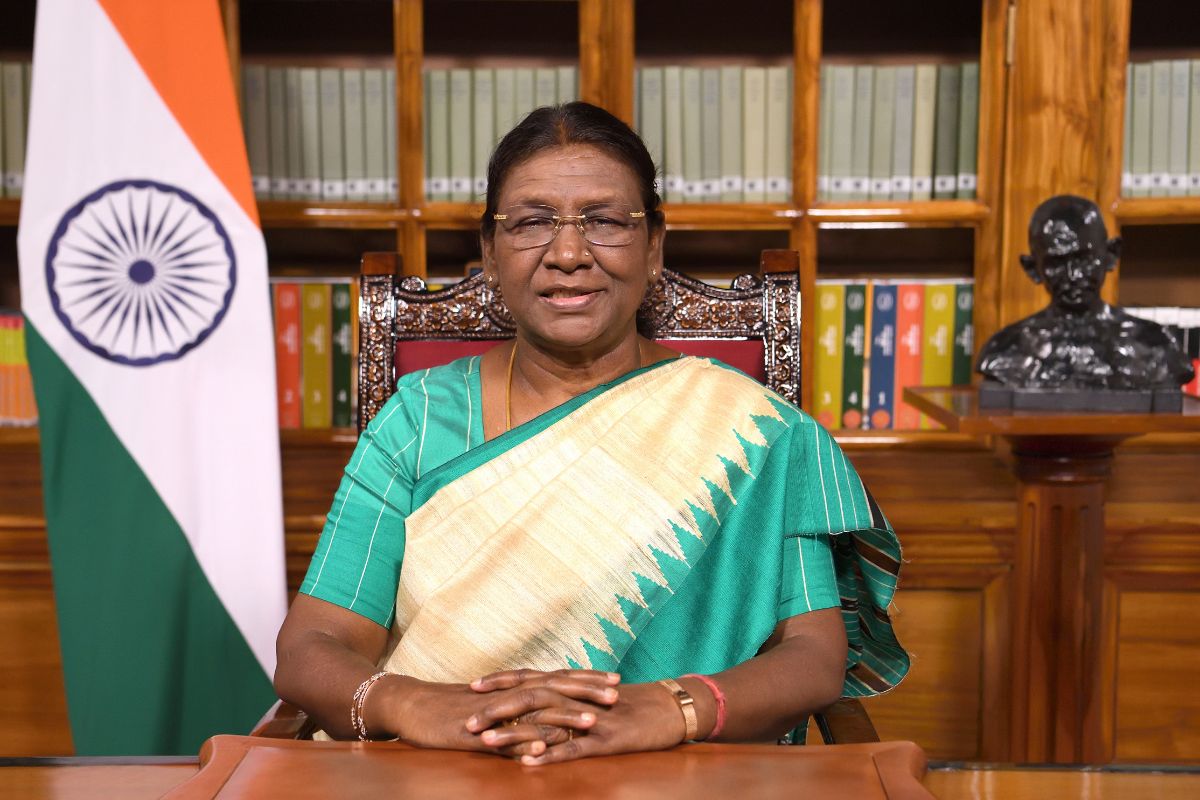
On July 25, 2022, Droupadi Murmu was sworn in as the 15th President of India.
Her election represented a historic milestone: she became the first person from a tribal community to serve as President of India and the second woman to hold the office.
In her address after assuming office, Murmu reflected on her journey from a small tribal village to the country's highest constitutional position.
She described her rise as a reflection of India's democratic possibilities and spoke about the aspirations of women, young people and communities that have historically faced disadvantages.
Her belief in the power of education
Education occupies a special place in Murmu's personal story.
She has repeatedly spoken about how education transformed her own life. In an official address, she described education as the most transformative force in her journey—from a young woman in a remote tribal village to a teacher, public servant and eventually President of India.
That message is particularly significant for young girls who may feel that their circumstances determine how far they can go.
Murmu's own journey shows that the starting point of a person's life does not necessarily determine the destination.
A journey shaped by resilience
Murmu's personal life has also included profound loss and difficult periods.
Despite these challenges, she continued her public life and eventually reached the highest constitutional office in the country. The official presidential profile describes her journey as one marked by perseverance and resilience.
Her story therefore goes beyond titles and positions.
It is about continuing to move forward when circumstances are difficult.
An inspiration for young women
For many young women in India, Murmu's journey carries a powerful message.
She began life in a remote village where opportunities were limited. She became the first woman from her village to receive college education, worked as a government employee and teacher, entered grassroots public service, served as a legislator and Governor, and eventually became President of India.
Her journey demonstrates the importance of giving girls access to education and opportunities to participate fully in society.
The lesson from Droupadi Murmu's life
Droupadi Murmu's story is ultimately a story about possibility.
A girl from a remote village can dream beyond the boundaries of her surroundings.
A teacher can become a public servant.
A grassroots representative can rise through the democratic system.
And a woman from a tribal community can reach the highest constitutional office of the country.
Her life reminds us that success is not always about where you begin. Sometimes, it is about the determination to keep moving forward.
For the young girls of India, perhaps the most inspiring part of Droupadi Murmu's journey is simple:
Your circumstances may shape your beginning, but they do not have to define your future.